HVAC Shop - Refrigerant Scale
9 products
Showing 1 - 9 of 9 products
Refrigerant Scales for Accurate Charging & Recovery in Australia
Getting the refrigerant charge right is critical for system efficiency, reliability and compliance. That’s why licensed HVAC technicians across Australia rely on refrigerant scales to charge and recover by weight, not guesswork. This collection brings together digital, wireless and programmable scales from trusted brands like Fieldpiece, TIF, Hilmor, Mastercool and Javac, backed by local support from HVACShop.com.au.
Correct refrigerant charge is also a big part of energy-efficient HVAC operation and leak-control programs, which are highlighted in Australian government guidance on HVAC and refrigeration systems.
Why refrigerant scales matter
When you’re working on anything from a small split system to a large commercial plant, a good refrigerant scale helps you:
- Charge to a known mass, in line with equipment nameplates and best practice.
- Recover accurately, tracking how much refrigerant has been removed from a system or cylinder.
- Support compliance with Australian refrigerant handling requirements and your own WHS procedures.
- Reduce emissions and waste by avoiding over-charging, under-charging and unnecessary venting.
- Work faster by monitoring charge while you handle other tasks nearby.
What you’ll find in this refrigerant scale range
The scales in this collection are selected specifically for HVAC and refrigeration work in Australian conditions:
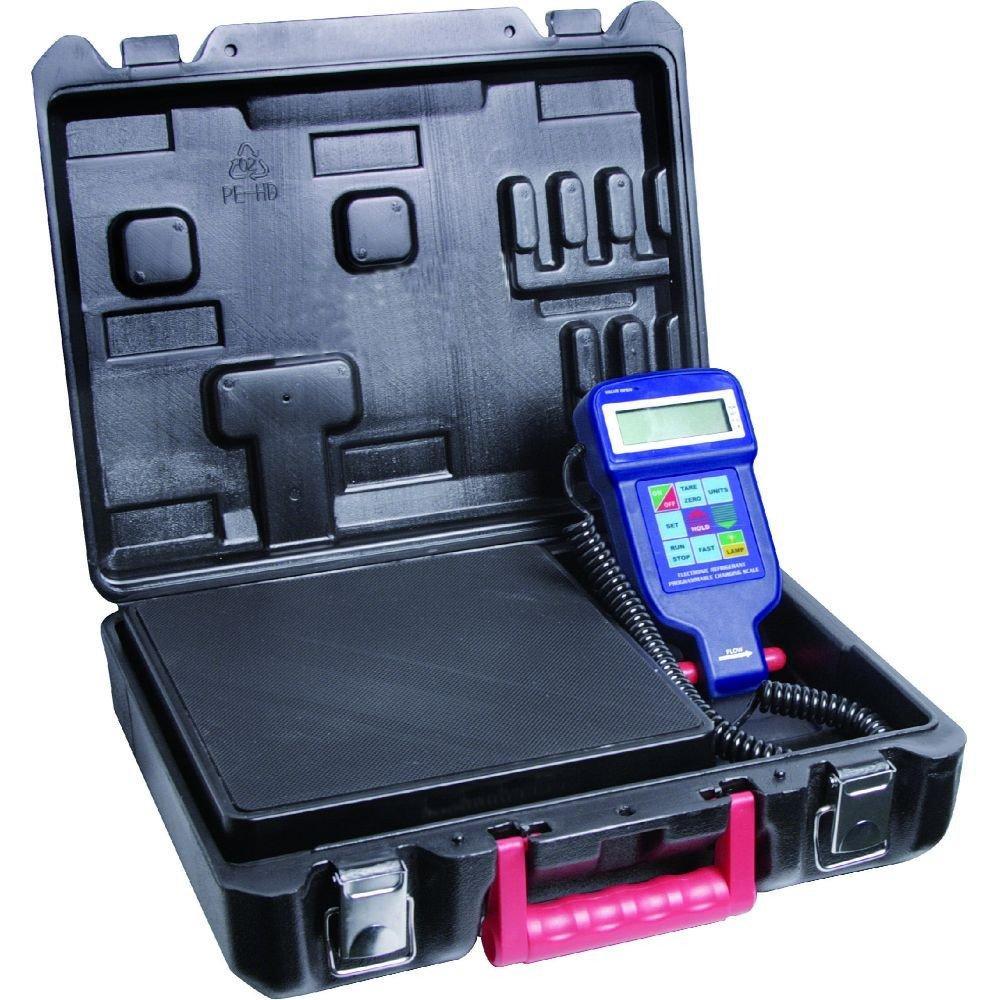
- 50 kg refrigerant scales ideal for domestic and light commercial cylinders, including the Fieldpiece Digital Refrigerant Scales 50 kg SRS1.
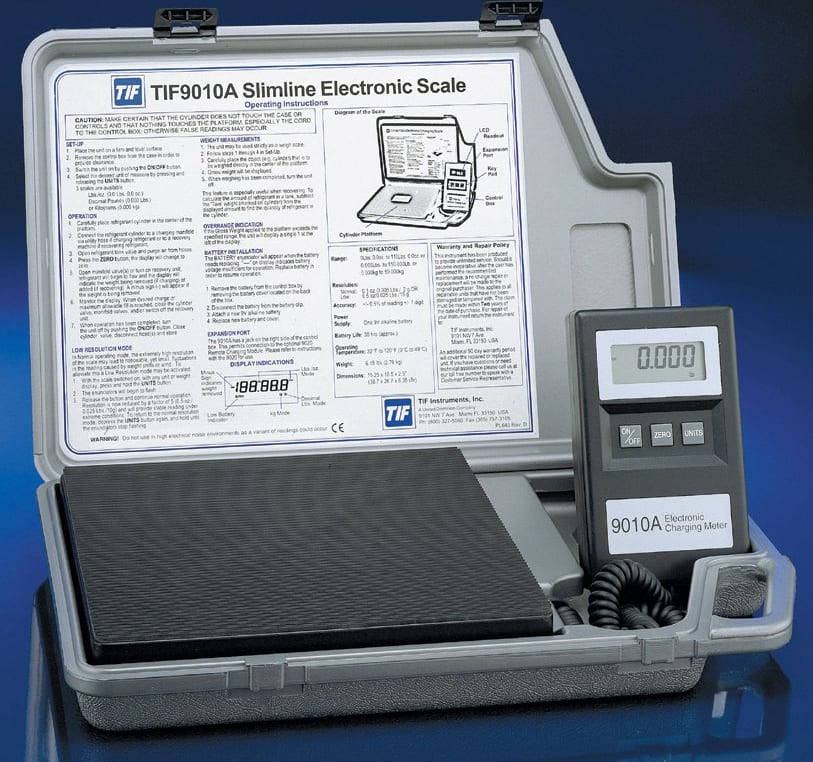
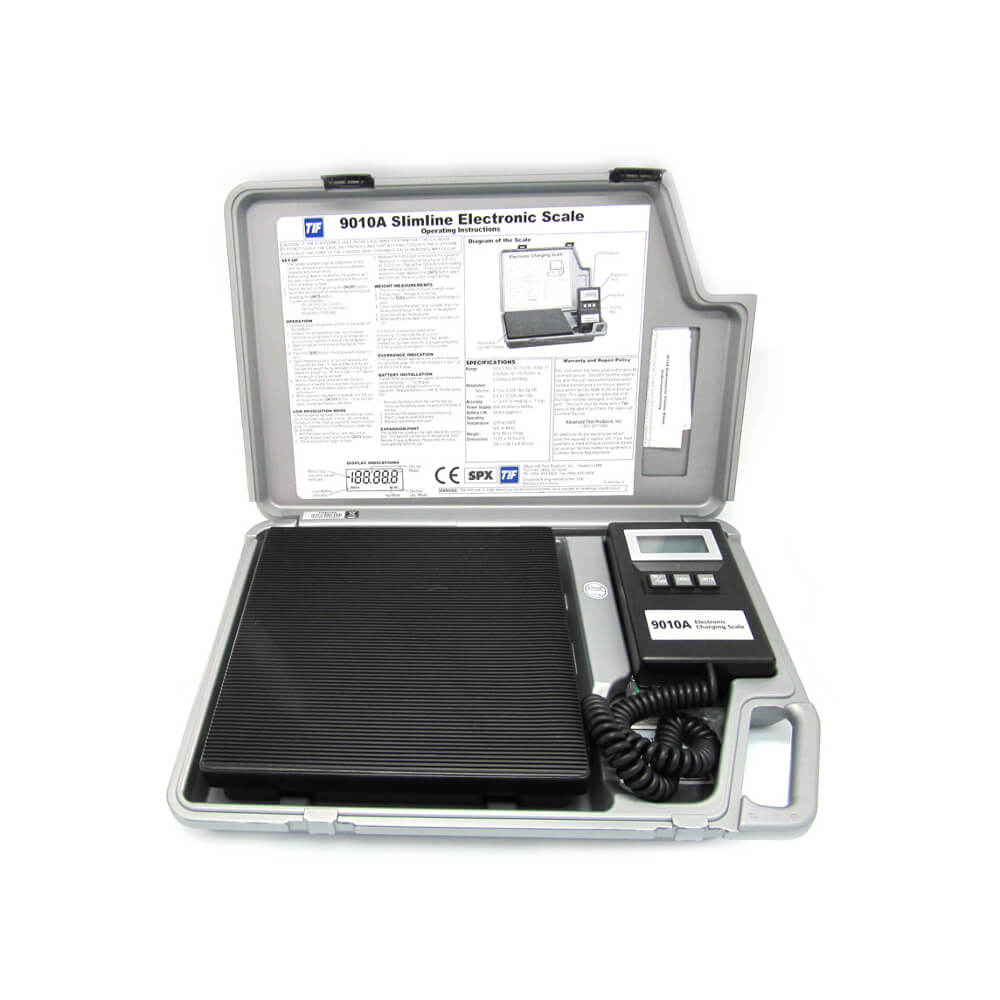
- 100 kg and 110 kg scales suited to larger cylinders and multi-system plant, such as the TIF 100 kg Digital Refrigerant Scale and Hilmor 100 kg Wired Refrigerant Scale RSW220.
- Wireless scales with handheld remotes and solenoid valves, including the Mastercool Wireless Refrigerant Scale with Solenoid Valve 98315.
- Programmable charging scales like the Javac Procharge 100P, which allow you to set target charges and automate part of the process.
Featured refrigerant scales
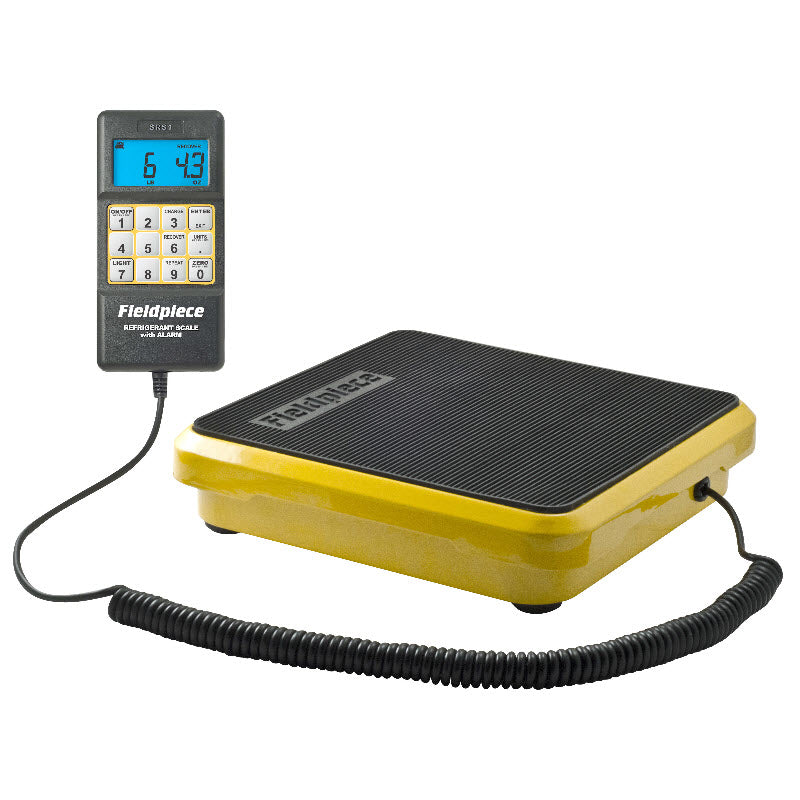
Fieldpiece SRS1 – 50 kg Digital Refrigerant Scale
The Fieldpiece SRS1 digital refrigerant scale is a tough, trade-ready option for everyday charging and recovery. It features a 50 kg capacity, fine resolution, charging and recovery alarms, and a rugged case that’s easy to carry up ladders or across plant decks. It’s a great match with our Fieldpiece HVAC tools range and digital manifolds.
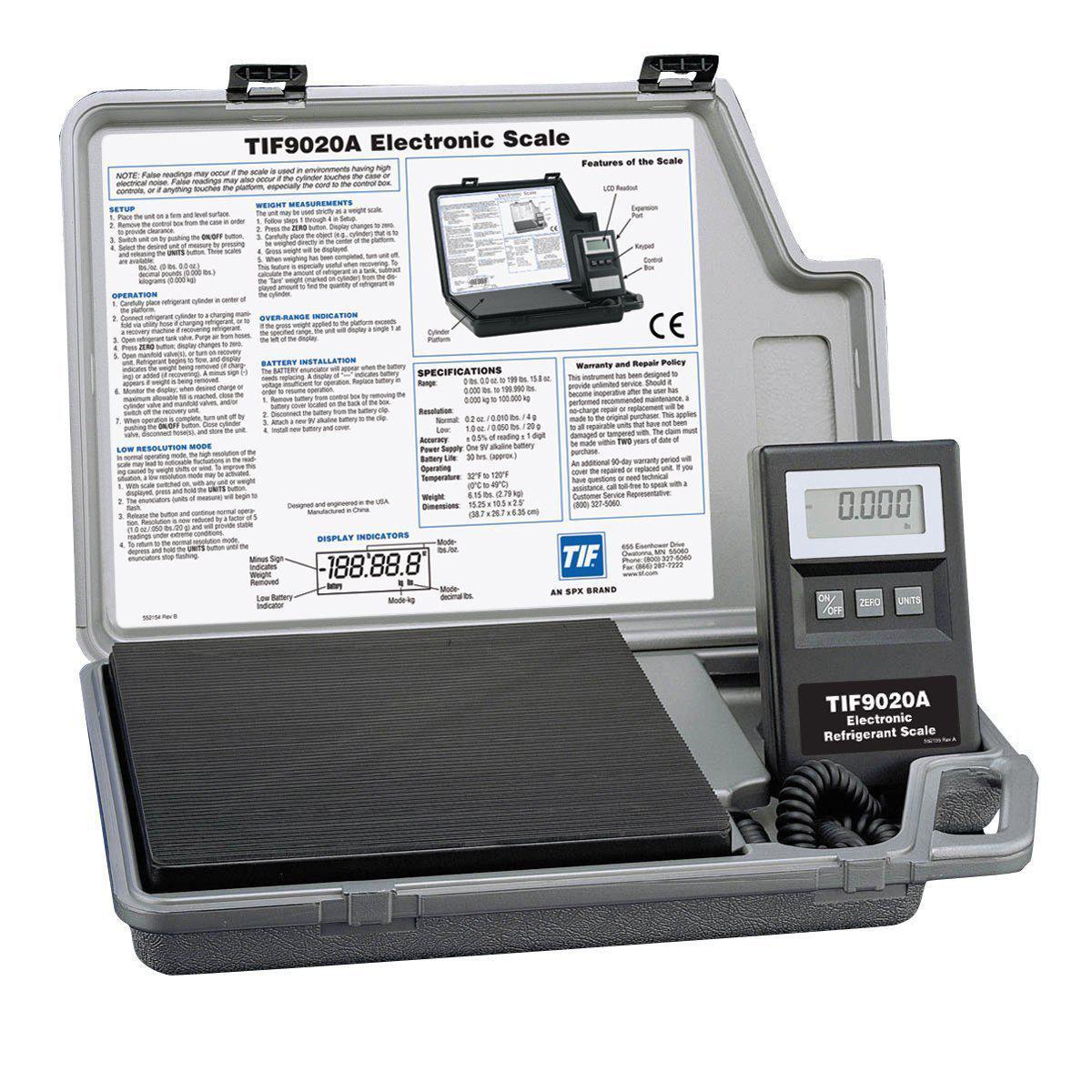
TIF 9020A – 100 kg Digital Refrigerant Scale
Need more capacity? The TIF 100 kg Digital Refrigerant Scale (9020A) is built for techs who regularly use larger cylinders or work on bigger installations. It provides three display modes (kg, lb, oz), high resolution, and a slim form factor that still packs in a 100 kg capacity.
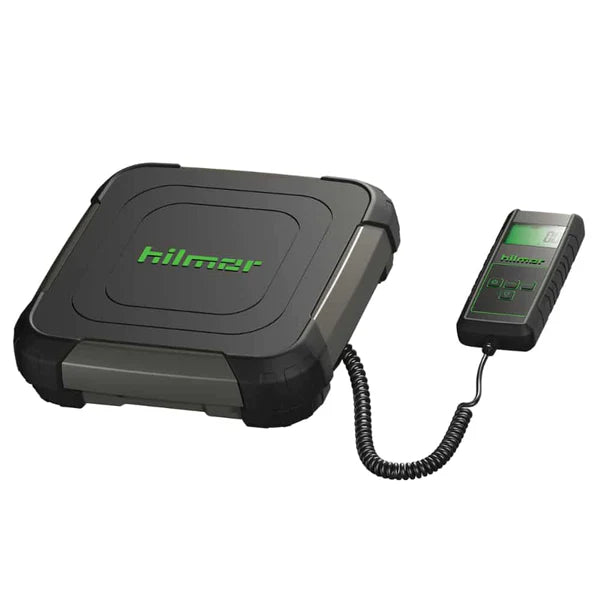
Hilmor RSW220 – 100 kg Wired Refrigerant Scale
The Hilmor RSW220 wired refrigerant scale offers a robust 100 kg capacity with a wired remote, intuitive controls and a durable platform. It’s a solid choice for technicians who prefer simple, wired reliability in harsh work environments.
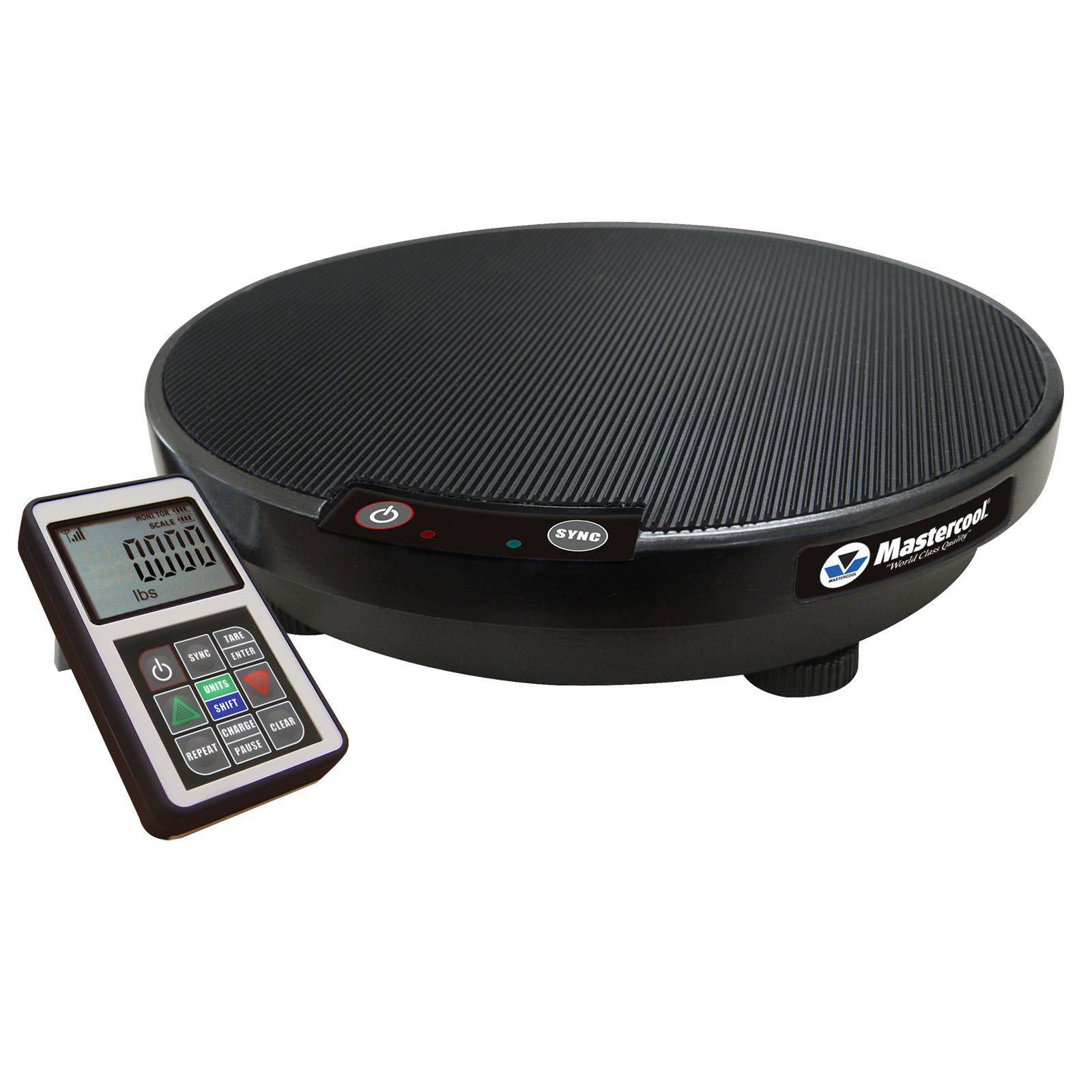
Mastercool 98315 – Wireless Refrigerant Scale with Solenoid Valve
The Mastercool wireless refrigerant scale 98315 adds wireless connectivity and a built-in solenoid valve, making it easier to manage charging without being tied to the cylinder. With a 110 kg capacity, fine resolution and a 31 cm platform, it suits a wide range of cylinders and field conditions.
Javac Procharge 100P – Programmable Digital Refrigerant Scale
The Javac Procharge 100P is designed for technicians who want programmable control. Dial in a target charge, monitor progress and let the scale handle the counting for you. It integrates well into a charging station setup alongside vacuum pumps and refrigerant recovery units.
How to choose the right refrigerant scale
When selecting a refrigerant scale for your HVAC-R work in Australia, consider:
- Capacity – 50 kg is generally fine for smaller systems and cylinders; 100 kg or more is better if you’re regularly handling larger bottles or multiple connected systems.
- Resolution and accuracy – Finer resolution makes it easier to charge to nameplate values, especially on smaller systems or where manufacturer tolerances are tight.
- Wired vs wireless – Wired remotes are simple and robust; wireless systems can make it easier to monitor charge while you move around the plantroom or roof.
- Programmable features – Scales like the Javac Procharge 100P and Mastercool 98315 can handle preset charges and recovery alarms, saving time on repetitive tasks.
- Ruggedness – Look for durable housings, stable platforms and protective cases that can handle ladders, utes and harsh outdoor sites.
Safety, licensing and refrigerant handling in Australia
Refrigerant scales are only one part of a safe and compliant charging setup. In Australia:
- Anyone handling scheduled refrigerants must hold the appropriate licences and authorisations, and follow the Australia and New Zealand Refrigerant Handling Code of Practice .
- The code and related fact sheets emphasise leak repair, correct charge, and avoiding venting to atmosphere.
- Federal guidance from the Department of Climate Change, Energy, the Environment and Water (DCCEEW) highlights finding and fixing leaks and ensuring correct refrigerant charge as key elements of good maintenance programs.
- State and territory WHS regulators and Safe Work bodies provide additional requirements around electrical and refrigerant safety on worksites.
For more background on efficiency and maintenance, see resources like:
- energy.gov.au – HVAC equipment and energy efficiency
- energy.gov.au – Refrigeration equipment guidance
- Department of Climate Change, Energy, the Environment and Water (DCCEEW)
- ARCtick – Australian Refrigeration Council
Related HVAC charging & testing tools
Building a reliable charging and commissioning kit? Pair your refrigerant scale with:
- Refrigerant gauges and manifolds – digital and analogue manifolds for commissioning and diagnostics.
- Vacuum pumps and vacuum gauges – to evacuate systems properly before charging.
- Leak detectors – electronic and bubble solutions for finding and fixing leaks.
- Test & measurements tools – multimeters, clamp meters and thermometers to support commissioning and fault-finding.
- Blog resources such as “You Need a Refrigerant Scale” and “Best Refrigeration Scales for Sale” for extra tips and product comparisons.
Refrigerant Scales – Frequently Asked Questions
Why do I need a refrigerant scale for HVAC work?
A refrigerant scale lets you charge and recover by weight instead of relying only on system pressures or superheat/subcool readings. Australian refrigerant handling guidance notes that charging to a known mass is the most accurate way to achieve the correct refrigerant charge when combined with leak repair and proper evacuation. That supports better performance, fewer call-backs, and reduced emissions.
Is using a refrigerant scale mandatory in Australia?
The legal requirements focus on licensing, preventing emissions and following the Refrigerant Handling Code of Practice. The code emphasises correct charging, leak repair and documentation. In practice, using a refrigerant scale is widely considered best practice and is strongly recommended because it helps you comply with manufacturer specifications and accurately record charges and recovery quantities.
Who is allowed to handle refrigerant in Australia?
Anyone who decants, recovers or charges scheduled refrigerants in Australia must hold the appropriate refrigerant handling licence, and their business must hold a refrigerant trading authorisation, unless a specific exemption applies. Apprentices and trainees generally work under supervision. If you are not licensed, you should never attempt to charge or recover refrigerant yourself – call a licensed HVAC-R contractor instead.
What capacity scale should I choose – 50 kg or 100 kg?
For typical residential and light commercial work with smaller cylinders, a 50 kg scale like the Fieldpiece SRS1 is often sufficient. If you regularly work on larger commercial systems, central plant or use big bottles, a 100 kg or 110 kg scale (for example the TIF 9020A or Hilmor RSW220) gives you more headroom and versatility. Always check that the scale’s maximum capacity comfortably exceeds your heaviest cylinder when full.
How accurate are these refrigerant scales?
Each product page lists the resolution and accuracy. Many trade-grade scales provide resolution down to 0.01 kg or better and quote an accuracy as a percentage of reading. For small systems and critical charges, choose a higher-resolution scale and follow the manufacturer’s instructions on positioning the cylinder and avoiding vibration or wind effects.
How often should I calibrate my refrigerant scale?
Follow the manufacturer’s recommendation first. Many technicians adopt an annual calibration schedule for regular field use, with more frequent checks where quality systems, contracts or site procedures require it. It’s good practice to record calibration dates and results as part of your business documentation, especially where you’re working under strict environmental or QA requirements.
Can I use these scales with flammable refrigerants such as R32?
Refrigerant scales weigh the cylinder rather than the refrigerant directly, so the main considerations for R32 and other A2L refrigerants relate to equipment design, allowable charge, ventilation and ignition sources. Only licensed and appropriately trained technicians should work with flammable refrigerants, and they must follow Australian Standards and the Refrigerant Handling Code of Practice along with any specific R32 guidance issued by regulators and industry bodies. Always do a risk assessment and follow the cylinder and equipment manufacturer’s safety instructions.
Trust & Compliance
Author: HVAC Content Specialist – HVACShop.com.au
Technical review: Licensed Refrigeration & Air Conditioning Technician ARCtick
Business details: HVACShop.com.au • ABN 98 351 143 900 • Phone: 0412 333 115 • Email: hvacshop.com.au@gmail.com
How this page was created
This page is based on manufacturer specifications for refrigerant scales sold on HVACShop.com.au, Australian refrigerant handling codes of practice, and federal and state guidance on HVAC maintenance, energy efficiency and refrigerant management. It is written in plain Australian English for refrigeration technicians, HVAC installers, service techs, facilities teams and informed buyers.
References
- energy.gov.au – guidance on HVAC, refrigeration and energy efficiency
- Department of Climate Change, Energy, the Environment and Water (DCCEEW) – refrigerant and emissions information
- ARCtick – licensing, codes of practice and refrigerant handling guidance
- AIRAH – industry resources and refrigerant handling materials
- CHOICE – independent Australian consumer and product safety information
Last updated: 2025-12-03 AEST